A changing outlook
Many lung cancers are still diagnosed at an advanced stage. But as Dr. Suresh Advani explains in his patient-education writing, treatment has evolved dramatically over the last decade. Doctors can now identify subgroups of patients whose cancers respond to specific treatments, and long-term survival is being seen even in advanced disease — something rarely heard of before.
Symptoms that should be checked
- A cough lasting more than three weeks, or a change in a long-standing cough
- Coughing up blood
- Breathlessness or wheezing
- Chest pain
- Repeated chest infections
- Hoarseness
- Unexplained weight loss, loss of appetite or tiredness
Who is at higher risk
- Current or former smokers — the most important risk factor
- Exposure to second-hand smoke
- Occupational exposure to dust, fumes or chemicals
- Family history of lung cancer
- Previous lung disease
How lung cancer is diagnosed
- Chest X-ray — can show shadows that need further evaluation
- CT scan — shows the size, shape and position of a tumour and whether it has spread to lymph nodes or other organs
- MRI — used to check for spread to the brain or spine
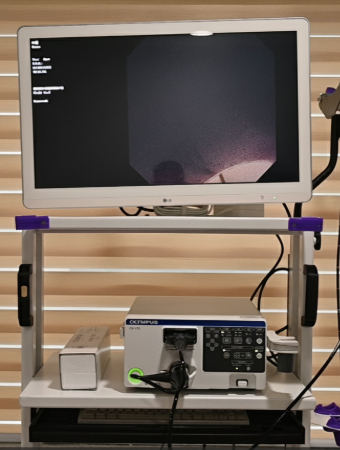
- Bronchoscopy — a thin scope examines the airways and takes samples
- Biopsy and pathology — confirm the type of cancer; special tests guide targeted treatment
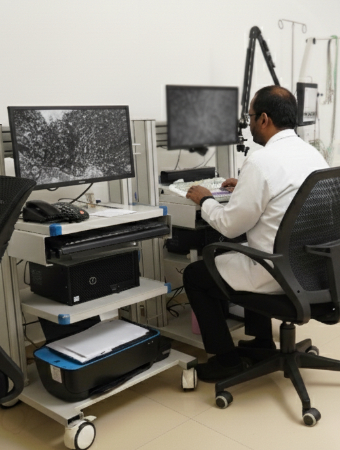
At Smita Memorial Hospital, the Radiology department has a Philips Incisive 128-slice CT scanner and Philips 1.5T MRI, with CT-guided biopsy. The Respiratory Medicine department has a dedicated bronchoscopy suite and pulmonary function laboratory, and the Pathology department offers histopathology and immunohistochemistry (IHC).
Treatment options
Lung cancer treatment is planned by a team according to the type and stage of cancer and the patient's health. Options include surgery, radiation therapy, chemotherapy, targeted therapy and immunotherapy, often in combination, along with palliative care for symptom relief.
Smita Memorial Hospital's Oncology Department, led by Prof. (Dr.) Suresh Advani, provides chemotherapy, immunotherapy, targeted therapy and hormone therapy, with surgical oncology and a dedicated chemotherapy day care. Respiratory Medicine manages lung cancer alongside breathing problems, and Interventional Radiology lists bronchial artery embolisation for coughing blood.
Lowering your risk
- Stop smoking — it is never too late to benefit
- Avoid second-hand smoke
- Use protective equipment at work where there are fumes or dust
- See a doctor early for persistent chest symptoms
Understanding lung cancer types
- Non-small cell lung cancer — the more common group, including adenocarcinoma and squamous cell carcinoma
- Small cell lung cancer — tends to grow and spread faster, strongly linked to smoking
Within these groups, pathology tests can identify specific features of the cancer. This is what allows doctors to select targeted therapies for suitable patients, which has been one of the most important advances in lung cancer care.
What happens during bronchoscopy
A bronchoscopy uses a thin, flexible tube with a camera passed through the nose or mouth into the airways. It lets the doctor see the airways directly and take samples, including bronchoalveolar lavage. The throat is numbed and sedation may be given for comfort. Smita Memorial Hospital's Respiratory Medicine department has a dedicated bronchoscopy suite with flexible fibreoptic bronchoscopy.
Managing breathlessness and symptoms
- Pulmonary rehabilitation and breathing exercises from the physiotherapy team
- Treatment of fluid around the lungs when present
- Medicines to ease cough and breathlessness
- Good nutrition to maintain strength
- Emotional support for patient and family
The importance of quitting smoking — even after diagnosis
It is never too late to stop smoking. Quitting after a lung cancer diagnosis can improve breathing, help treatment work better, reduce complications from surgery and improve overall health. Ask your doctor for support; nicotine replacement and counselling can make quitting more achievable.
Specialists you can consult


Dr. Reshma R Balachandran
MBBS, MS (General Surgery), MCh (Surgical Oncology) DNB (General Surgery)…
Frequently asked questions
Can lung cancer be cured?
It depends on the type and stage. Early-stage cancers have the best outcomes, and newer targeted therapies and immunotherapy have improved results even in advanced disease.
Is a CT scan available in Thodupuzha?
Yes. Smita Memorial Hospital has a Philips Incisive 128-slice CT scanner and a 1.5T MRI.
Does a long-term cough always mean cancer?
No. Asthma, COPD, infections and TB are more common causes, but a cough lasting more than three weeks should be evaluated.
Who treats lung cancer at Smita Hospital?
The Oncology Department, led by Prof. (Dr.) Suresh Advani, working with Respiratory Medicine, Radiology and Pathology.
Sources
- Dr. Suresh Advani — How Can Lung Cancer Be Detected Early and Treated?, drsureshadvani.in
- Oncology, Respiratory Medicine & Radiodiagnosis, smitahospital.com