What causes cervical cancer?
Cervical cancer affects the cervix — the lower part of the womb that opens into the vagina. Almost all cases are linked to long-lasting infection with the human papillomavirus (HPV), a very common virus passed on through sexual contact. Most people clear HPV naturally, but in some women the infection persists and can cause cell changes that may, over time, become cancer.
HPV alone is not always enough. Other factors that increase risk include smoking, a weakened immune system and inadequate nutrition. According to Dr. Suresh Advani's patient-education article, cervical cancer is generally viewed as curable, and the chances of successful treatment rise significantly when it is detected early.
Warning signs
- Bleeding after intercourse
- Bleeding between periods or after menopause
- Unusual or foul-smelling vaginal discharge
- Pelvic pain or pain during intercourse
Early cervical changes usually cause no symptoms at all — which is exactly why regular screening matters. Unusual bleeding, especially after intercourse, should always be evaluated by a gynaecologist.
Screening: Pap smear and HPV testing
A Pap smear collects cells gently from the cervix to look for abnormal changes. An HPV test checks for the high-risk virus. The guidance in Dr. Advani's article describes Pap tests from age 21 at least once every three years, and after 30 less frequently when combined HPV and Pap results are negative. Your gynaecologist will advise the schedule suited to you.
Smita Memorial Hospital's Obstetrics and Gynaecology department offers cancer screening with cervical smear, colposcopy and cervical biopsy, alongside comprehensive gynaecological check-ups.
If your Pap result is abnormal
- An infection may simply be treated and the test repeated
- A colposcopy — a magnified examination of the cervix — may be advised
- A small biopsy may be taken for the pathology laboratory
- Pre-cancerous changes can often be treated before cancer develops
Prevention
- HPV vaccination — recommended for preteens around 11–12 and can be given from age 9; catch-up vaccination is recommended up to age 26 for those not vaccinated
- Regular screening even after vaccination
- Avoid smoking
- Safer sexual practices — condoms reduce but do not fully prevent HPV
- Good nutrition and prompt attention to symptoms
Treatment
Treatment depends on the stage. The gynaecology team performs procedures including hysterectomy by laparoscopic, abdominal and vaginal routes, and the Oncology Department, led by Prof. (Dr.) Suresh Advani, provides medical oncology including chemotherapy, immunotherapy and targeted therapy as appropriate, with surgical oncology support.
Preparing for a Pap smear
- Schedule it when you are not having your period
- Avoid intercourse, vaginal creams or douching for a short period before the test, as advised
- Tell the doctor about any unusual bleeding, discharge or pain
- The test takes only a few minutes and results come from the laboratory later
Understanding colposcopy
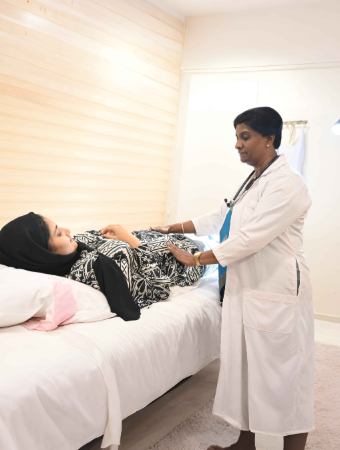
A colposcopy is a closer look at the cervix using a special magnifying instrument called a colposcope. A solution is applied to the cervix to highlight abnormal areas, and a small biopsy may be taken from any suspicious area. It is done in an outpatient setting and usually takes a short time. Some women feel mild cramping. Smita Memorial Hospital's gynaecology department performs colposcopy and cervical biopsy.
Why regular screening is so effective
Cervical cancer usually develops slowly from pre-cancerous changes over several years. Screening catches these changes before they become cancer, when they can be treated with simple procedures. According to Dr. Suresh Advani's patient-education writing, most people diagnosed with cervical cancer have not had a Pap test in the preceding five years, or ever. Regular screening is one of the most powerful protections a woman has.
Talking about screening in the family
Many women put their family's health before their own and postpone screening. Encourage mothers, sisters and daughters to have regular gynaecological check-ups and to discuss HPV vaccination for young girls with a doctor. Smita Memorial Hospital's Whole Body Check Up Plan includes a Pap smear and gynaecologist consultation, and the hospital's women's health initiative programmes promote awareness in the community.
Specialists you can consult

Dr. Anies M.S
MBBS, MRCOG: Part 2, Fellowship in HIV Medicine. Certicate of Sonography…


Frequently asked questions
Can cervical cancer be prevented?
To a large extent, yes — through HPV vaccination, regular Pap/HPV screening and treatment of pre-cancerous changes.
Is a Pap smear painful?
It is usually quick and may cause mild discomfort but not significant pain.
Where can I get a Pap smear in Thodupuzha?
The Obstetrics and Gynaecology department at Smita Memorial Hospital offers cervical smear, colposcopy and cervical biopsy.
I have been vaccinated. Do I still need screening?
Yes. The vaccine does not protect against every HPV type, so screening is still recommended.
Sources
- Dr. Suresh Advani — How Can You Prevent Cervical Cancer?, drsureshadvani.in
- Obstetrics and Gynaecology, smitahospital.com
- Oncology, smitahospital.com