What is aortic stenosis?
The aortic valve opens with every heartbeat to let blood flow from the heart's main pumping chamber into the aorta and on to the body. In aortic stenosis, the valve leaflets become stiff and narrowed — commonly due to age-related calcium deposits — so the heart must work harder to push blood through. Over time this strains the heart muscle.
Mild aortic stenosis may cause no symptoms for years. Once it becomes severe and symptoms appear, doctors generally recommend that the valve be replaced.
Symptoms
- Breathlessness on exertion, and later at rest
- Chest pain or tightness with activity
- Dizziness or fainting, especially during exertion
- Tiredness and reduced ability to do daily activities
- Swelling of the ankles in advanced disease
Older adults sometimes put these symptoms down to age. If a doctor has heard a heart murmur, an echocardiogram is the key test.
How it is diagnosed
An echocardiogram shows how narrow the valve is and how well the heart is pumping. Smita Memorial Hospital's cardiology department offers 2D echocardiography, colour and tissue Doppler, and trans-oesophageal echocardiography. CT imaging and a coronary angiogram may be needed when planning valve replacement.
Treatment options
- Surgical aortic valve replacement — the valve is replaced during open-heart surgery
- Transcatheter aortic valve replacement (TAVR, also called TAVI) — a new valve is placed inside the old one using a catheter, usually through an artery in the groin
- Medicines — can help symptoms but do not fix the narrowed valve
The choice depends on age, surgical risk, valve anatomy and other conditions, and is made by the heart team with the patient.
What happens during TAVR
A catheter carrying a collapsed artificial valve is guided through a blood vessel to the heart under X-ray and echo guidance. When correctly positioned inside the diseased valve, the new valve is expanded, pushing the old leaflets aside and immediately taking over their function. There is no need to open the chest or stop the heart.
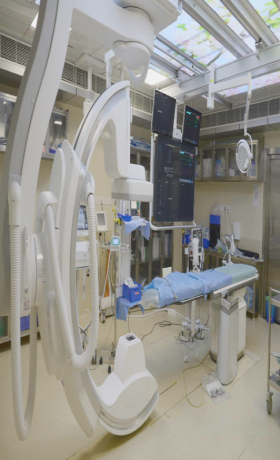
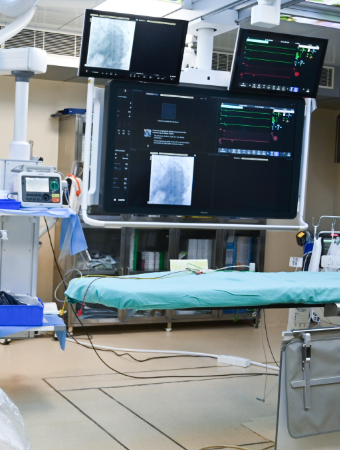
Smita Memorial Hospital's Department of Cardiac Sciences performed transcatheter aortic valve replacement (TAVR) as a first-of-its-kind procedure in Idukki district, using its Philips Azurion 7C20 cath lab.
Recovery
- Hospital stay is usually shorter than after open-heart surgery
- Walking typically begins soon after, as advised
- Blood-thinning medicines and regular echocardiograms are part of follow-up
- Dental hygiene matters — tell your dentist you have a heart valve
Why valve replacement should not be delayed once symptoms start
Aortic stenosis can remain silent for years. But once a narrowed valve causes breathlessness, chest pain or fainting, the condition tends to progress, and medicines alone cannot relieve the obstruction. This is why cardiologists recommend timely assessment for valve replacement once severe aortic stenosis becomes symptomatic, rather than waiting for symptoms to become very severe.
Tests before TAVR
- Echocardiogram — confirms severity and heart function
- Trans-oesophageal echocardiography in some patients — detailed images of the valve
- CT scan — measures the valve and blood vessels to choose the valve size and access route
- Coronary angiogram — checks for blockages in the heart arteries
- Blood tests including kidney function
- Assessment of overall fitness, frailty and other medical conditions
Smita Memorial Hospital offers 2D echocardiography, trans-oesophageal echocardiography, a Philips Incisive 128-slice CT scanner and coronary angiography in its cath lab.
Living with a new valve
- Take prescribed blood thinners exactly as advised
- Attend follow-up with echocardiograms to check the valve
- Maintain good dental hygiene and tell doctors and dentists about your valve
- Report fever, breathlessness, chest pain, dizziness or swelling promptly
- Stay active and follow a heart-healthy lifestyle
Other valve problems the heart team treats
Aortic stenosis is one of several valve diseases. Leaking valves and narrowing of other valves may need repair or replacement. Smita Memorial Hospital's Cardiothoracic Surgery Department provides a wide range of valve surgeries, including repair and replacement of damaged heart valves, and performed the first valve surgery in the Idukki region.
Specialists you can consult


Frequently asked questions
Is TAVR available in Idukki?
Yes. Smita Memorial Hospital's Department of Cardiac Sciences performed TAVR as a first-of-its-kind procedure in Idukki district.
Who is suitable for TAVR?
Suitability depends on age, surgical risk, valve and blood vessel anatomy and overall health. The heart team assesses each patient with echo and CT imaging.
Is TAVR open-heart surgery?
No. The new valve is delivered through a catheter, usually from the groin, without opening the chest.
How do I get assessed?
Book with a cardiologist at Smita Memorial Hospital on +91 94961 43852 and bring any previous echo reports.
Sources
- Department of Cardiac Sciences, smitahospital.com
- Cardio Thoracic & Vascular Surgery, smitahospital.com