What is a coronary angiogram?
A coronary angiogram is an X-ray test that shows the inside of the coronary arteries — the blood vessels that supply the heart muscle. A thin tube called a catheter is passed through an artery to the heart, and a special contrast dye is injected. The dye makes the arteries visible on X-ray, so the cardiologist can see whether any are narrowed or blocked, and exactly where.
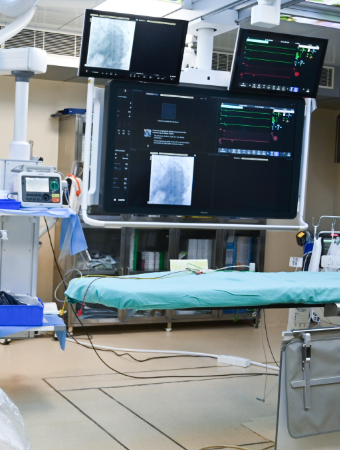
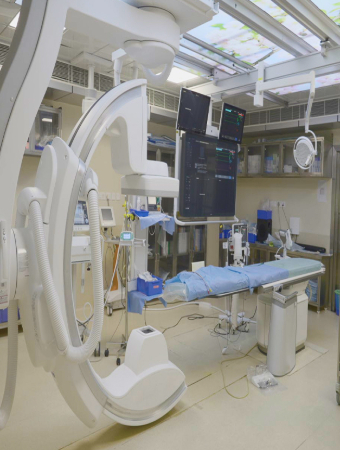
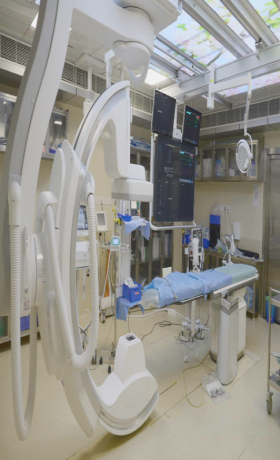
The test is performed in a cardiac catheterisation lab. At Smita Memorial Hospital, this is equipped with the Philips Azurion 7C20 system with FlexVision.
Why your doctor may advise an angiogram
- Chest pain suggestive of angina, or an abnormal treadmill or stress echo test
- A heart attack, or changes on ECG and blood tests suggesting heart muscle damage
- Heart failure or reduced heart pumping on echocardiography where blockages need to be ruled out
- Before some heart valve procedures or major surgery
- Follow-up of known coronary artery disease when symptoms change
An angiogram is not usually the first test. Cardiologists typically start with an ECG, echocardiography and stress testing, and recommend an angiogram when the results or symptoms suggest it is needed.
How to prepare
- Tell the doctor about all your medicines, especially blood thinners and diabetes medicines — you may be told to adjust some
- Mention any allergy, especially to contrast dye, iodine or previous reactions
- Tell the team if you have kidney problems; the dye is processed by the kidneys and extra precautions may be taken
- Follow fasting instructions given by the hospital
- Bring previous ECGs, echo reports and prescriptions
- Arrange for a family member to accompany you
During the test
You lie on a table and remain awake. The skin over the wrist (radial artery) or groin (femoral artery) is cleaned and numbed with local anaesthetic, so you feel little more than pressure. A small sheath is placed in the artery and the catheter is guided to the heart under X-ray.
When the dye is injected, some people feel a brief warm sensation. The cardiologist takes pictures from different angles. The test itself usually takes a short time, although preparation and recovery add to your total stay.
Tools that may be used for a clearer picture
Sometimes the angiogram alone does not show whether a narrowing is significant. Smita Memorial Hospital's cardiology department lists additional techniques including:
- FFR (fractional flow reserve) — measures pressure across a narrowing to judge whether it limits blood flow
- IVUS (intravascular ultrasound) — ultrasound images from inside the artery
- OCT (optical coherence tomography) — very high-resolution imaging inside the artery
- Contrast-free angiogram/angioplasty options listed for selected patients
Risks
A coronary angiogram is a commonly performed and generally safe test, but like any invasive procedure it carries some risk. Possible problems include bruising or bleeding at the puncture site, reactions to the contrast dye, effects on kidney function, and rarely rhythm disturbances or damage to a blood vessel. Your cardiologist will explain the risks relevant to your health before asking for your consent.
After the test
- A band or dressing is placed over the puncture site; you rest while it is monitored
- Drink fluids as advised to help flush out the dye
- Avoid lifting heavy weights with the arm or straining for the period advised
- Report bleeding, swelling, severe pain, or coldness or numbness in the hand or leg immediately
- Your cardiologist explains the results and next steps — medicines, angioplasty or surgery
Wrist or groin: which route is used?
The catheter can be introduced through the radial artery at the wrist or the femoral artery at the groin. The wrist route often allows people to sit up and move sooner, while the groin route may be preferred for certain complex procedures or when wrist arteries are small. Your cardiologist decides based on your anatomy, the likely procedure and safety.
Reading your angiogram report
Angiogram reports use terms that can look confusing. Here is what some common words mean:
- LAD, LCx and RCA — the three main coronary arteries (left anterior descending, left circumflex and right coronary artery)
- Left main — the short trunk that divides into the LAD and LCx; disease here is significant
- Percentage stenosis — how narrowed a segment looks; for example 90% means severely narrowed
- Total occlusion — the artery is completely blocked
- Single, double or triple vessel disease — how many main arteries have significant narrowing
- Collaterals — small natural bypass vessels that sometimes form around a blockage
Ask your cardiologist to show you the images and explain which blockages matter and why.
Angiogram for people with kidney problems or diabetes
The contrast dye is filtered by the kidneys. In people with reduced kidney function, doctors take extra precautions — checking kidney tests beforehand, giving fluids and using the minimum necessary amount of dye. Some diabetes medicines may be paused for a short time around the test. Smita Memorial Hospital's cardiology department lists contrast-free angiogram and angioplasty among its capabilities for selected patients; your cardiologist will advise whether this applies to you.
What happens next after the result
- No significant blockage — the cause of symptoms may be looked for elsewhere, and risk factors are treated
- Blockages suitable for angioplasty — stenting in the same sitting or a planned procedure
- Complex or multiple blockages — discussion with cardiothoracic surgeons about bypass surgery (CABG)
- Moderate narrowings — FFR, IVUS or OCT may help decide whether treatment is needed
- In all cases — medicines, lifestyle changes and follow-up
Specialists you can consult

Frequently asked questions
Is an angiogram painful?
Most people feel only the local anaesthetic injection and some pressure. The dye can cause a brief warm feeling.
Can the angiogram and angioplasty be done together?
Often yes, if a suitable blockage is found and you have given consent. Sometimes the team plans angioplasty or bypass separately after reviewing the images.
Where can I get an angiogram in Thodupuzha?
Smita Memorial Hospital & Research Centre performs coronary angiograms in its Philips Azurion 7C20 cath lab. Book with a cardiologist on +91 94961 43852.
Do I need to stay overnight?
It depends on your condition, the access site and whether angioplasty is done. Your cardiologist will advise you.
Sources
- Department of Cardiac Sciences, smitahospital.com
- Cath Lab, smitahospital.com