Why babies are admitted to the NICU
- Premature birth — before 37 weeks
- Low birth weight
- Breathing difficulty, such as respiratory distress syndrome
- Infections (neonatal sepsis)
- Low blood sugar
- Significant jaundice
- Perinatal asphyxia — lack of oxygen around birth
- Congenital conditions or after newborn surgery
What the NICU provides
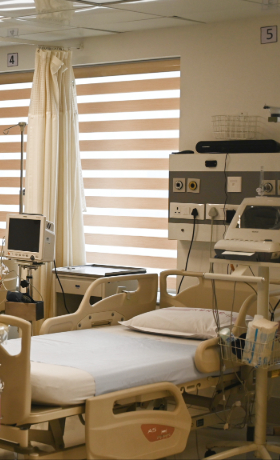
Smita Memorial Hospital has a 7-bed Neonatal Intensive Care Unit for premature and critically ill newborns, managed by experienced neonatologists.
- Respiratory support: conventional ventilators, CPAP and HHHFNC
- 6 LED phototherapy units
- In-house neurosonography, portable X-ray and blood gas testing at the bedside
- Total parenteral nutrition (TPN), PICC lines, umbilical catheterisation and exchange transfusion
- Coordination with obstetricians, paediatricians and other specialists
- Long-term follow-up for at-risk infants
Kangaroo Mother Care
Kangaroo Mother Care means holding the baby skin-to-skin on the mother's (or father's) chest. It helps keep the baby warm, supports breastfeeding, steadies breathing and heart rate, and strengthens bonding.
Smita Memorial Hospital promotes Kangaroo Mother Care and encourages mothers to be actively involved in their newborn's care, with regular updates so parents can make informed decisions.
How parents can help
- Wash hands carefully every time before touching your baby
- Ask the team when you can hold your baby and do skin-to-skin care
- Express breast milk if your baby cannot feed directly yet
- Ask questions — write them down before rounds
- Take care of your own rest and nutrition
- Limit visitors to protect the baby from infection
Going home
Babies are usually ready to go home when they are breathing on their own, feeding well, keeping warm and gaining weight. Before discharge, the team teaches parents how to feed, bathe and recognise warning signs, and arranges follow-up in the Neonatology OPD.
Understanding the equipment around your baby
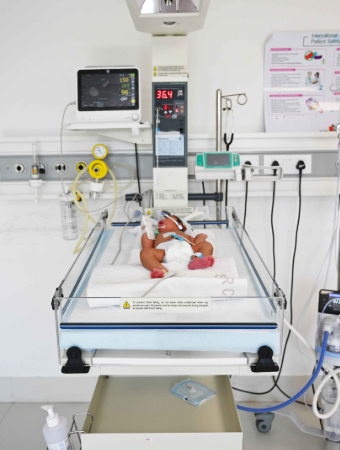
- Incubator or radiant warmer — keeps the baby warm
- Monitors — track heart rate, breathing and oxygen levels; alarms are common and do not always mean a problem
- CPAP or ventilator — support breathing
- Intravenous lines — give fluids, nutrition and medicines
- Feeding tube — delivers breast milk until the baby can suck and swallow
- Phototherapy lights — treat jaundice
Ask the nurses to explain each device. Understanding them makes the NICU less frightening.
Feeding a premature baby
Breast milk is especially valuable for premature babies, protecting against infection and supporting growth. If the baby cannot breastfeed yet, mothers are encouraged to express milk regularly, which is given through a feeding tube. As the baby matures, feeding progresses to cup, spoon or breastfeeding. Total parenteral nutrition (TPN) through a vein is used for babies who cannot yet tolerate milk.
Common challenges and milestones
- Learning to breathe without support
- Keeping warm without an incubator
- Coordinating sucking, swallowing and breathing for feeds
- Steady weight gain
- Managing jaundice and infections
Progress is often two steps forward and one step back. Celebrate small milestones and ask the team about the plan each day.
After going home
- Follow feeding and weight-check schedules
- Keep the baby warm and away from people with coughs and colds
- Wash hands before handling the baby
- Complete vaccinations and follow-up appointments, including hearing and eye checks as advised
- Seek help immediately for breathing difficulty, poor feeding, fever or unusual sleepiness
Frequently asked questions
How many NICU beds does Smita Hospital have?
The Neonatal ICU has 7 beds for premature and critically ill newborns.
Can I breastfeed my baby in the NICU?
When your baby is ready, yes. Until then, expressed breast milk can often be given. The team will guide you.
What is Kangaroo Mother Care?
Skin-to-skin holding of the baby on the parent's chest, which supports warmth, feeding, stability and bonding.
Is there follow-up after discharge?
Yes. The Neonatology OPD provides ongoing care and guidance for newborns.
Sources
- Neonatology, smitahospital.com
- Critical Care, smitahospital.com
- Visitors Policy, smitahospital.com