Normal (vaginal) delivery
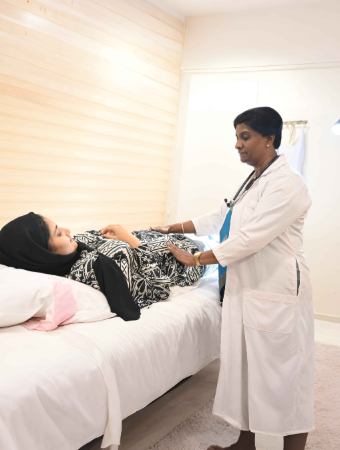
For most healthy pregnancies, a normal vaginal delivery is safe and allows a quicker recovery. The labour team monitors mother and baby throughout, and supports positions and breathing techniques to help labour progress.
What is painless delivery?
Painless delivery usually refers to labour analgesia with an epidural. A thin tube is placed in the lower back by an anaesthesiologist, and medicine is given through it to reduce labour pain while the mother stays awake and can still push.
- It is given only after assessment by the anaesthesia and obstetric teams
- It does not usually slow recovery after birth
- It is not suitable for everyone, for example with certain bleeding disorders or infections
- Monitoring of mother and baby continues throughout
Smita Memorial Hospital offers painless delivery options. The Anaesthesia department is trained in regional anaesthesia and provides pain management during and after procedures.
VBAC — vaginal birth after caesarean
Many women who have had a caesarean in a previous pregnancy can safely attempt a vaginal birth next time. This is called VBAC. Whether it is suitable depends on the reason for the previous caesarean, the type of uterine scar, the time since the last delivery and the current pregnancy.
VBAC should take place in a hospital where an emergency caesarean can be done immediately if needed. Smita Memorial Hospital offers VBAC, with a labour operation theatre integrated with the Obstetrics and Gynaecology unit.
Caesarean section
A caesarean section may be planned in advance or done during labour for the safety of mother or baby — for example if the baby is in a difficult position, labour is not progressing, or there are signs of distress. Recovery takes longer than after a vaginal birth, and the team supports pain relief, early walking and breastfeeding.
What the labour suites provide
- Gynaecology outpatient consultation rooms for antenatal care
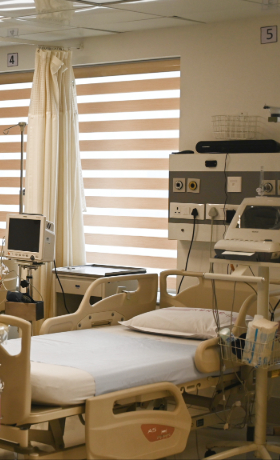
- Labour rooms and LDR suites designed for comfort and safety
- A labour operation theatre for interventions
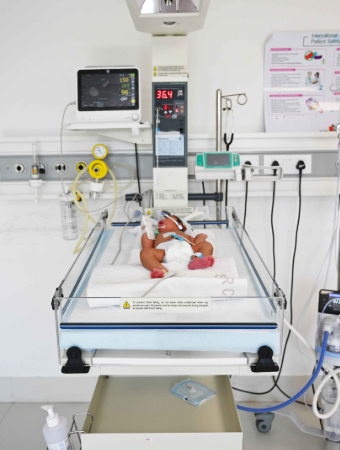
- Neonatology ICU and Neonatology OPD for newborn care
- Private single rooms — the hospital has no general wards
Signs that labour has started
- Regular, painful contractions that become stronger and closer together
- Breaking of waters — a gush or steady trickle of fluid
- A “show” — mucus mixed with a little blood
- Lower back pain that comes and goes with tightening
Come to hospital when contractions are regular and strong, when your waters break, or immediately if there is bleeding, reduced baby movements or severe pain.
Other ways to cope with labour pain
- Moving and changing positions
- Breathing and relaxation techniques practised during pregnancy
- Warm compresses and massage
- Continuous support from a birth companion where permitted
- Medicines for pain relief as decided by the team
An epidural is one option among several. Many women use a combination, and plans can change during labour.
Recovery after a caesarean section
- Walking early helps recovery and reduces the risk of clots
- Support the wound when coughing or laughing
- Avoid lifting anything heavier than your baby for the period advised
- Keep the wound clean and dry
- Breastfeeding is encouraged — ask the nurses for positions comfortable after surgery
- Report fever, wound redness or discharge, or heavy bleeding
The first days with your newborn
After delivery, mother and baby are monitored closely. The team supports breastfeeding, checks the baby's feeding, colour and temperature, and watches for jaundice. The Neonatology OPD provides ongoing newborn care and guidance after discharge, and newborn hearing screening (OAE) is available in the Audiology department.
Specialists you can consult

Dr. Anies M.S
MBBS, MRCOG: Part 2, Fellowship in HIV Medicine. Certicate of Sonography…


Frequently asked questions
Is painless delivery available in Thodupuzha?
Yes. Smita Memorial Hospital offers painless delivery options, supported by its anaesthesia team.
Does an epidural harm the baby?
Labour epidurals are widely used and generally considered safe. Mother and baby are monitored throughout; discuss any concerns with your obstetrician and anaesthesiologist.
Can every woman have a VBAC?
No. Suitability depends on the previous caesarean and current pregnancy. Your obstetrician will assess you.
Is a NICU available if the baby needs help?
Yes. The 7-bed NICU is on the same floor as the labour rooms.
Sources
- Obstetrics and Gynaecology, smitahospital.com
- Labour Suites, smitahospital.com
- Anaesthesia, smitahospital.com