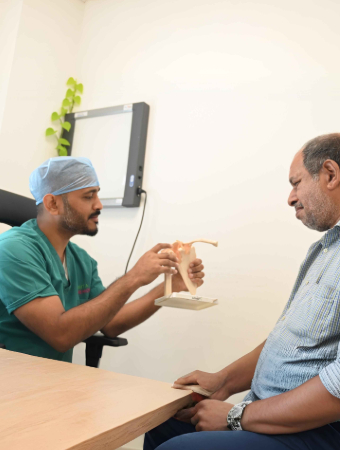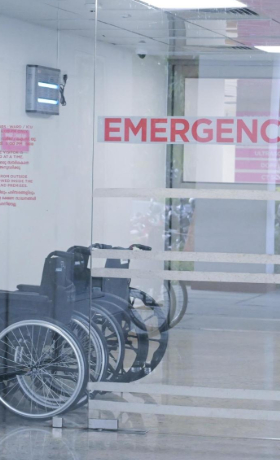
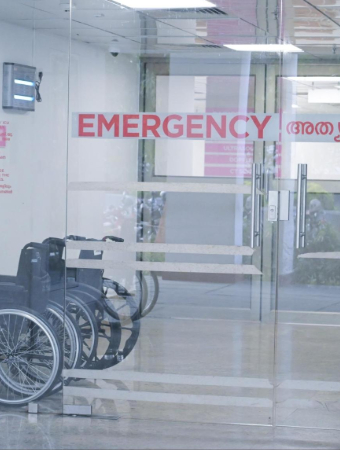
The golden hour
Doctors use the term golden hour for the period shortly after a serious injury when rapid medical treatment has the greatest chance of preventing death and disability. Severe bleeding, head injury and chest injury can worsen quickly. The priority is to call for help early and get the injured person to a hospital equipped for trauma.
At the scene: keep yourself safe first
- Park safely, switch on hazard lights and warn oncoming traffic
- Do not enter a burning vehicle or unsafe area
- Call for an ambulance and emergency help immediately
- Check whether the person is responding and breathing
- If there is heavy bleeding, press firmly on the wound with a clean cloth
- Do not move a person who may have a neck or spine injury unless there is immediate danger
- Do not remove a motorcyclist's helmet unless it is necessary to clear the airway
- Do not give food or water
First aid for a suspected fracture
- Keep the injured part still in the position found
- Support it with padding or a makeshift splint if trained to do so
- Do not try to push a protruding bone back in; cover the wound with a clean cloth
- Apply a wrapped cold pack to reduce swelling
- Watch for signs of shock — pale, cold, sweaty skin and fast breathing
Head injury: warning signs
- Loss of consciousness, even briefly
- Repeated vomiting
- Severe or worsening headache
- Drowsiness, confusion or unusual behaviour
- Fits, weakness of limbs, or bleeding from the ear or nose
Anyone with these signs after a head injury needs urgent hospital assessment and a CT scan.
What a trauma centre provides
Smita Memorial Hospital's Emergency and Trauma Centre is a tertiary trauma centre with a multidisciplinary trauma team from neurosurgery, orthopaedics, general surgery and anaesthesiology.
- Emergency operation theatre, triage room and trauma bay
- Shock room and code system for cardiac arrest
- Mobile X-ray, ultrasound, CT and MRI
- Care for poly-trauma, high-velocity injuries and severe head injuries
- ICUs including a 5-bed Neurosurgical ICU and 8-bed Surgical ICU
- Minimal invasive fracture fixation, internal fixation and limb reconstruction by the Orthopaedics team
After treatment
Fracture healing and recovery from trauma often require follow-up, wound care and physiotherapy. The Physiotherapy Department provides post-trauma and post-operative rehabilitation, and SMHRC @ Home offers nursing and physiotherapy at home.
Recognising shock after an injury
After heavy bleeding or a serious injury, the body can go into shock — a dangerous drop in blood flow to organs.
- Pale, cold, clammy skin
- Fast, weak pulse and rapid breathing
- Confusion, restlessness or drowsiness
- Thirst and weakness
Keep the person lying down, keep them warm, control bleeding and get emergency help immediately. Do not give food or drink.
Burns and cuts at the scene
- Burns: cool the burn with clean running water for several minutes; do not apply ice, toothpaste or oil; cover loosely with a clean cloth
- Cuts: apply firm pressure with a clean cloth; raise the injured limb if possible
- Do not remove objects stuck in a wound — pad around them and seek help
Smita Memorial Hospital's Plastic & Reconstructive Surgery department treats acute burns and post-burn contracture, and the Emergency Department handles wound suturing, dressings and plaster application.
Staying safe on Idukki roads
- Wear a helmet on every two-wheeler journey, including pillion riders
- Always wear seat belts, front and back
- Slow down on hairpin bends and wet roads during the monsoon
- Never drink and drive
- Avoid using mobile phones while driving
- Keep an emergency number list and a basic first-aid kit in the vehicle
Smita Memorial Hospital has supported community road safety awareness, including a road safety and drug awareness programme at Newman College, Thodupuzha, and distributed first aid boxes to auto-rickshaw drivers.
Rehabilitation after serious injury
Recovery from trauma does not end when the fracture is fixed. Physiotherapy restores movement and strength, pain management helps comfort, and some patients need support to return to work or cope emotionally with the experience. The Physiotherapy Department provides musculoskeletal rehabilitation after trauma, and SMHRC @ Home offers nursing and physiotherapy at home.
Specialists you can consult
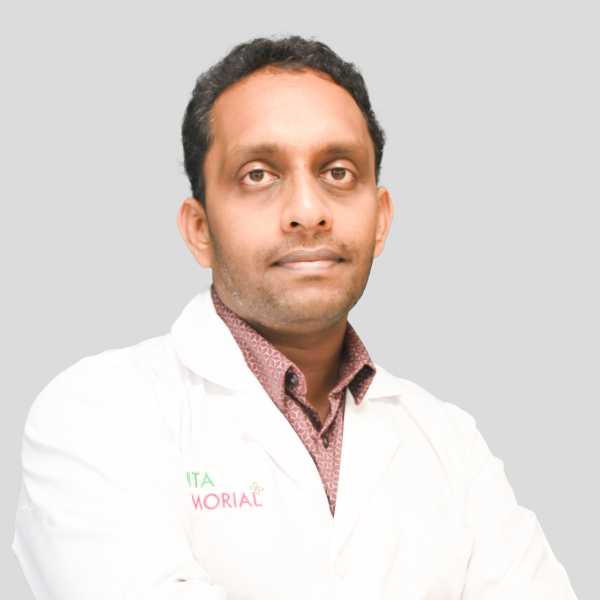
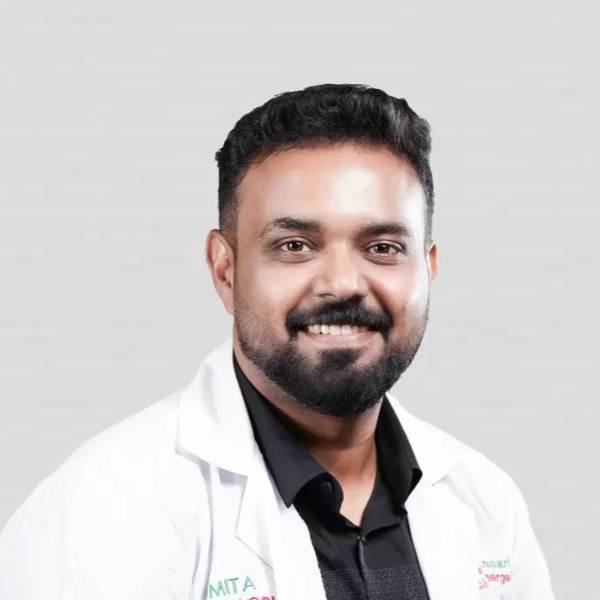
Dr. Bineesh Mon Gopi
MBBS, BLS & ACLS Instructor, Masters in Emergency Medicine (MEM)
Frequently asked questions
Is there a 24-hour trauma centre in Thodupuzha?
Yes. Smita Memorial Hospital's Emergency and Trauma Centre operates 24×7 with an emergency OT, trauma team, CT and MRI.
What is the ambulance number?
Call 97786 57373 for Smita Memorial Hospital's ambulance service (paid). For the Emergency Department, call 0486 235 0700.
Should I move an accident victim?
Avoid moving someone who may have a neck or spine injury unless there is immediate danger such as fire. Wait for trained help if possible.
Can insurance be used after an accident?
Yes. For accident or ICU admissions, the patient can be admitted by showing the TPA ID card and paying a ₹10,000 deposit, with the cashless process completed within 24 hours.
Sources
- Emergency & Trauma Care, smitahospital.com
- Ambulance Services, smitahospital.com
- Orthopaedics, smitahospital.com