Why chest pain should never simply be ignored
Chest pain is one of the most common reasons people visit an emergency department, and it is also one of the most misunderstood. Many episodes turn out to be harmless — a pulled muscle after lifting, heartburn after a heavy meal, or anxiety. But chest pain can also be the first sign of a heart attack, a tear in the aorta, or a clot in the lungs, and in these conditions the time between the first symptom and treatment directly affects how much of the heart or lung can be saved.
The difficulty is that it is not always possible to judge the cause of chest pain at home. Heart-related pain does not always feel dramatic. Some people describe only a heaviness, a tightness, or discomfort that comes and goes. Older adults, women and people with diabetes are more likely to have unusual or mild symptoms. For this reason cardiologists advise a simple rule: if you are unsure, treat chest pain as an emergency until a doctor tells you otherwise.
Warning signs that need emergency care now
Call the emergency department or go to the nearest hospital with 24×7 cardiac facilities immediately if chest pain comes with any of the following:
- Pressure, squeezing, heaviness or tightness in the centre of the chest lasting more than a few minutes, or coming back again and again
- Pain that spreads to the left or right arm, shoulder, neck, jaw, back or upper abdomen
- Breathlessness, even without much pain
- Sweating, nausea, vomiting or a feeling of impending doom
- Dizziness, light-headedness, fainting or a sudden collapse
- A racing, very slow or irregular heartbeat along with the discomfort
- Sudden severe tearing pain spreading to the back
- Chest pain with sudden breathlessness after a long journey, surgery or a period of bed rest
Chest pain that is less likely to be the heart
Some patterns of chest pain point towards other causes. These still deserve a doctor's opinion if they persist, but they are less likely to be a cardiac emergency:
- Sharp pain that you can point to with one finger and that gets worse when you press on the spot
- Pain that changes clearly with a particular movement, twisting or deep breathing after exercise or a strain
- A burning feeling rising from the stomach, worse after food or lying down, relieved by antacids
- Pain lasting only a few seconds at a time
- Pain related to coughing with a chest infection
Even with these patterns, it is safest to get checked if you have risk factors for heart disease such as diabetes, high blood pressure, high cholesterol, smoking, a family history of early heart disease, or if you are over 40. Acid reflux and heart pain can feel similar, and it is not unusual for both to exist together.
What to do in the first few minutes
- Stop what you are doing and sit or lie down in a comfortable position
- Call for help — tell the person on the phone that you have chest pain
- Loosen tight clothing and stay as calm as possible
- If a doctor has previously prescribed medicine for chest pain, take it as instructed
- Do not wait to see whether the pain settles on its own, and do not eat a heavy meal or exert yourself
- Keep your previous prescriptions, ECG reports and medicine list ready to take to the hospital
If the person becomes unresponsive and is not breathing normally, bystanders should call for help and start chest compressions immediately if they know how.
What happens when you reach the hospital
At a hospital with a dedicated emergency and cardiac team, chest pain is treated as a priority. At Smita Memorial Hospital & Research Centre the Emergency and Trauma Centre is open 24×7, with a code system and shock room for cardiac arrest, cardiac monitors and biphasic defibrillators, and direct access to the Department of Cardiac Sciences.
The first steps usually happen within minutes of arrival:
- An ECG to look for signs of a heart attack or rhythm problem
- Checks of blood pressure, pulse and oxygen level
- Blood tests, including tests for heart muscle damage, from the hospital's 24×7 laboratory
- An echocardiogram or chest X-ray where needed
- Pain relief and medicines chosen by the doctor based on the likely cause
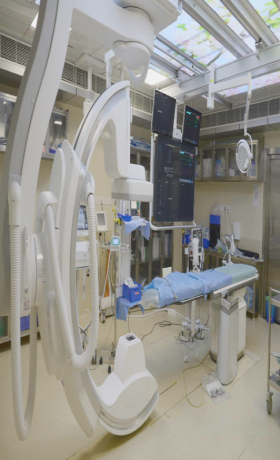
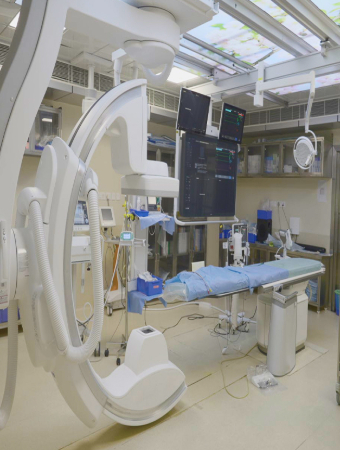
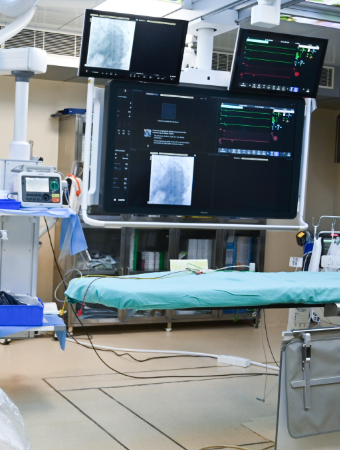
If the ECG shows a heart attack caused by a blocked artery, the cardiology team may recommend an immediate coronary angiogram and primary angioplasty. Smita Memorial Hospital offers 24×7 primary angioplasty in its cardiac catheterisation lab, which is equipped with the Philips Azurion 7C20 system with FlexVision, backed by an 8-bed Coronary Care Unit.
When chest pain is not an emergency but still needs a check-up
Many people have chest discomfort that comes on only with exertion — while climbing stairs or walking uphill — and settles with rest. This pattern, called stable angina, suggests that a coronary artery may be narrowed. It needs a planned cardiology consultation even if it is not happening right now.
The Department of Cardiac Sciences at Smita Memorial Hospital runs a Chest Pain Clinic, along with a Heart Failure Clinic and a Pacemaker Clinic. Depending on your symptoms, the cardiologist may recommend tests available at the hospital, such as:
- 2D echocardiography and colour Doppler imaging
- Treadmill test (TMT) or dobutamine stress echocardiography
- Holter monitoring for 24 hours up to 7 days
- 24-hour ambulatory blood pressure monitoring
- Coronary angiogram if non-invasive tests suggest a blockage
Reducing your risk of heart-related chest pain
Most heart attacks develop from long-term build-up in the coronary arteries. You can lower your risk by controlling the factors that speed up that process:
- Keep blood pressure, blood sugar and cholesterol under regular review
- Stop smoking and avoid tobacco in any form
- Stay physically active as advised by your doctor
- Maintain a healthy weight and a balanced diet
- Take prescribed heart medicines regularly and do not stop them without advice
- Know your family history and share it with your doctor
A preventive health check-up is a practical starting point. Smita Memorial Hospital's Whole Body Check Up Plan includes an ECG, echo screening and physician consultation.
The main causes of chest pain, explained
Doctors think about chest pain in groups, because the organs inside the chest — the heart, lungs, food pipe, major blood vessels, muscles and ribs — can all produce pain that feels similar.
- Heart: angina (reduced blood flow during exertion), heart attack, inflammation of the lining around the heart (pericarditis), and some rhythm problems
- Blood vessels: a tear in the aorta (aortic dissection) or a clot in the lung arteries (pulmonary embolism) — both emergencies
- Lungs: pneumonia, pleurisy (inflammation of the lung lining) and a collapsed lung
- Digestive system: acid reflux, spasm of the food pipe, gallbladder problems and ulcers
- Muscles and bones: strained chest muscles, rib injury or inflammation of the rib cartilage
- Anxiety and panic attacks, which can cause real, frightening chest discomfort with breathlessness and palpitations
Because several of these are serious and some are harmless, the safest approach is to let a doctor examine you and perform simple tests rather than guessing at home.
Chest pain in women, older adults and people with diabetes
The classic picture of a heart attack — crushing central chest pain spreading down the left arm — does not happen in everyone. Women are more likely than men to notice breathlessness, nausea, unusual tiredness, discomfort in the back, jaw or upper abdomen, or a vague feeling of being unwell. Older adults may simply become confused, weak or breathless. People with long-standing diabetes can have reduced pain sensation and may feel little or no chest pain during a heart attack.
If you or a family member belongs to these groups, take any new or unusual symptom seriously, particularly if it comes on with exertion or does not settle with rest.
What an ECG and blood tests can — and cannot — tell you
An electrocardiogram (ECG) records the heart's electrical activity in a few minutes and can show a heart attack, strain on the heart or a rhythm problem. But a normal ECG taken once does not always rule out a heart problem, especially very early in a heart attack. That is why doctors often repeat the ECG and blood tests for heart muscle damage over a few hours while you are observed.
If the first tests are reassuring but the doctor still suspects angina, planned tests such as a treadmill test, stress echo or coronary angiogram may be advised. At Smita Memorial Hospital these are available within the Department of Cardiac Sciences, so assessment can continue without transferring you elsewhere.
Questions to ask the doctor after an episode of chest pain
- What do you think caused my chest pain?
- Do my ECG and blood tests suggest a heart problem?
- Do I need further tests such as a treadmill test, echo or angiogram?
- Which symptoms should make me come back immediately?
- Should I change any medicines, or start new ones?
- What can I do to reduce my risk of heart disease?
Specialists you can consult

Frequently asked questions
Can gas or acidity cause chest pain?
Yes. Acid reflux can cause a burning pain behind the breastbone. However, it can feel similar to heart pain, so if you are unsure — especially if you have diabetes, high blood pressure or are over 40 — get an ECG done rather than assume it is gas.
Is there a 24-hour cardiac emergency service in Thodupuzha?
Yes. Smita Memorial Hospital & Research Centre has a 24×7 Emergency Department (0486 235 0700), a 24×7 Cardiac Helpline (+91 4862 208000) and 24×7 primary angioplasty in its cath lab.
Can a young person have a heart attack?
Although heart attacks are more common with age, they can occur in younger adults, particularly with smoking, diabetes, high cholesterol or a strong family history. Chest pain should be taken seriously at any age.
What is the Chest Pain Clinic?
It is an outpatient clinic in the Department of Cardiac Sciences where people with chest pain that is not an emergency are evaluated with the appropriate tests, such as ECG, echocardiography, treadmill test or Holter monitoring.
Sources
- Department of Cardiac Sciences, smitahospital.com
- Emergency & Trauma Care, smitahospital.com